
D15 – Democracy, Horse-Trading and the JMM Bribery Case: A Challenge to Representative Government
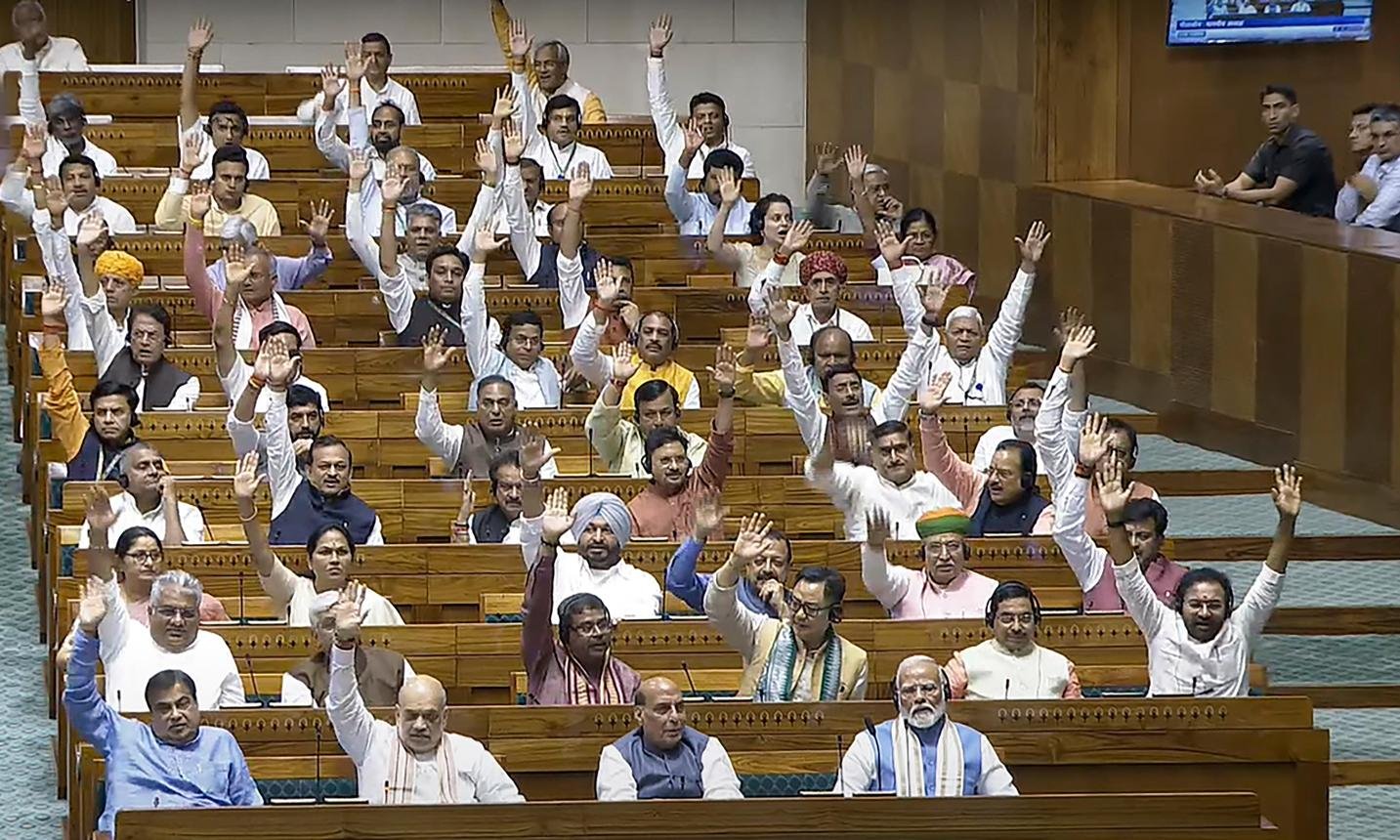
New Delhi: In a representative democracy, an elected Member of Parliament or a legislator does not merely cast a vote for a political party. That vote represents the mandate of the people who elected the representative.
This is why allegations that legislators were offered money, political positions or other benefits in exchange for supporting or opposing a government have repeatedly raised serious questions about the functioning of India’s parliamentary democracy.
The expression “horse trading” has become common in Indian political discourse to describe alleged attempts to influence elected representatives through inducements, particularly when a government is trying to prove its majority or survive a confidence or no-confidence motion.

One of the most consequential cases in this history is the 1993 Jharkhand Mukti Morcha (JMM) MPs bribery case, which eventually led to a major constitutional debate over parliamentary privilege and the criminal prosecution of legislators accused of accepting bribes.
The legal journey of the case went through the Special CBI Court, the Delhi High Court and the Supreme Court. More than three decades after the alleged events, the controversy contributed to one of India’s most important constitutional rulings on legislative bribery.
What Was the JMM Bribery Case?
The case originated during the political crisis surrounding the government of then Prime Minister P. V. Narasimha Rao in July 1993.

A no-confidence motion was moved against the minority government in the Lok Sabha. At the time, the government needed additional support to defeat the motion.
On 28 July 1993, the no-confidence motion was defeated, with 251 members voting in favour of the motion and 265 voting against it. Among those voting against the motion were four JMM MPs—Suraj Mandal, Shibu Soren, Simon Marandi and Shailendra Mahto—as well as members of the Janata Dal (Ajit Singh group).
The subsequent investigation alleged that some MPs had been bribed to vote in a manner that would enable the government to survive.
The allegations eventually resulted in criminal proceedings against several political figures, including former Prime Minister P. V. Narasimha Rao and former Union Minister Buta Singh.
The case became much larger than an ordinary corruption prosecution because it raised a fundamental constitutional question:

Can a Member of Parliament claim constitutional protection from criminal prosecution when the alleged offence involves accepting a bribe in connection with a vote in Parliament?
The 2000 Special CBI Court Verdict

After years of investigation and legal proceedings, a Special CBI Court delivered its judgment on 29 September 2000.
The court convicted former Prime Minister P. V. Narasimha Rao and former Union Minister Buta Singh in connection with the case.
The prosecution relied on evidence concerning the alleged payment of money to MPs in connection with the 1993 no-confidence motion.
The trial proceedings involved several accused persons, and the evidence against different individuals was considered separately.
The case did not end with the trial court’s verdict. Rao and Buta Singh challenged their convictions before the Delhi High Court.
Delhi High Court Overturns the Convictions

On 15 March 2002, the Delhi High Court delivered its judgment on the appeals filed by P. V. Narasimha Rao and Buta Singh.
The High Court set aside their convictions and acquitted them. It examined the evidence presented by the prosecution, including the testimony of the approver, Shailendra Mahto, and concluded that the evidence was insufficient to sustain the convictions.
The judgment represented a major turning point in the criminal proceedings.
However, the broader constitutional controversy surrounding legislative bribery was still unresolved.
The most important question concerned the scope of parliamentary privilege under Article 105 of the Constitution.
What Does Article 105 Protect?
Article 105 of the Constitution deals with the powers, privileges and immunities of Parliament and its members.
Article 105(2), in particular, provides protection to Members of Parliament from court proceedings in respect of anything said or any vote given by them in Parliament or a parliamentary committee.
The purpose of this protection is to safeguard the independence of parliamentary debate and voting.
The constitutional question was therefore not whether Parliament should have privileges—it clearly does—but rather:
How far can those privileges extend when criminal bribery is alleged?
Could a privilege intended to protect independent legislative functioning also protect a legislator accused of accepting money in exchange for a particular vote?
That question reached the Supreme Court.
The 1998 Supreme Court Judgment
In P. V. Narasimha Rao v. State (CBI/SPE), decided on 17 April 1998, a five-judge Constitution Bench considered the scope of Article 105 in the context of the JMM bribery case.
The case produced a divided judgment.
The majority took a broad view of the protection under Article 105(2). It held that certain MPs who had allegedly accepted bribes and then voted in Parliament were protected by parliamentary immunity in relation to the proceedings connected with their votes. The majority reasoned that Article 105(2) protected members from court proceedings having a nexus with their speech or vote in Parliament.
However, other judges on the Bench took a different view.
The minority opinion argued that accepting a bribe was an act separate from the actual speech or vote and therefore should not receive constitutional protection.
This disagreement became central to the constitutional debate that continued for decades.
Why the 1998 Judgment Was Controversial
The controversy surrounding the 1998 judgment was rooted in a difficult constitutional balance.
On one side was the need to protect legislators from politically motivated litigation over their parliamentary speech and voting.
On the other was the principle that elected representatives should not be placed beyond the reach of criminal law when accused of corruption.
The concern was particularly serious because a broad interpretation of parliamentary privilege could potentially create an unusual situation: a legislator might receive protection from prosecution for accepting a bribe connected with a legislative vote, while a person offering the bribe might not receive the same protection.
The Supreme Court itself later revisited this issue and rejected the majority approach from the 1998 judgment.
What Is “Horse Trading” in Politics?
The phrase “horse trading” is not a specific offence defined by that name in Indian criminal law.
It is a political expression generally used to describe alleged attempts to influence elected representatives through inducements.
Such inducements may allegedly include:
- Money or other financial benefits
- Ministerial positions
- Promises of political office
- Government positions or other advantages
- Support for political ambitions
- Other benefits offered in exchange for political support
The expression is particularly common during periods of political uncertainty, such as:
- Government formation
- Confidence motions
- No-confidence motions
- Rajya Sabha elections
- Legislative Council elections
- Coalition negotiations
- Defections and resignations
However, an important distinction must be made.
Political negotiation itself is not automatically illegal.
Political parties routinely negotiate over alliances, leadership, policy and government formation. Criminal liability arises where conduct satisfies the requirements of an applicable criminal law—for example, bribery or other unlawful conduct.
Therefore, the term “horse trading” should not by itself be treated as proof that a crime has occurred.
Major Alleged Horse-Trading and Cash-for-Votes Controversies
Over the years, Indian politics has witnessed several controversies involving allegations of inducements, defections or attempts to influence legislators.
| Year | Case / Political Crisis | Key Issue |
|---|---|---|
| 1993 | JMM MPs Bribery Case | Alleged bribery of MPs in connection with the Narasimha Rao government’s survival during a no-confidence motion |
| 2008 | Cash-for-Votes Case | Allegations surrounding the UPA-I government’s trust vote following the Indo-US nuclear deal |
| 2010 | Karnataka Trust Vote Controversy | Allegations concerning inducements and political support during government survival votes |
| 2016 | Uttarakhand Political Crisis | Defections and allegations of inducements during a government crisis |
| 2016 | Arunachal Pradesh Political Crisis | Political defections and allegations of attempts to alter the government |
| 2019 | Karnataka Government Collapse | Resignations and defections contributed to the fall of the coalition government |
| 2020 | Madhya Pradesh Political Crisis | Multiple MLA resignations led to a change in government |
| 2022 | Maharashtra Political Crisis | Shiv Sena split and allegations concerning political inducements and government formation |
| 2024 | Sita Soren Bribery Case | Supreme Court reconsidered whether legislators enjoy immunity from prosecution for bribery connected with legislative votes |
These episodes differ significantly in their facts, legal proceedings and outcomes. Allegations in a political controversy should therefore not automatically be treated as established criminal conduct.
The Anti-Defection Law and Political Switching
Another important constitutional development in this area was the introduction of the Tenth Schedule of the Constitution, commonly known as the Anti-Defection Law.
The law was introduced through the 52nd Constitutional Amendment in 1985.
Its broad purpose was to discourage elected legislators from changing political allegiance in circumstances covered by the constitutional disqualification provisions.
The Anti-Defection Law created rules under which legislators can face disqualification for certain forms of defection.
However, the law has also generated extensive constitutional and political debate over questions such as:
- What constitutes defection?
- How should party whips operate?
- Who should decide disqualification petitions?
- How quickly should such petitions be decided?
- What role should the Speaker or Chairman play?
- Can the law prevent political instability without restricting legitimate legislative dissent?
Thus, the Anti-Defection Law represents another part of India’s continuing attempt to balance political freedom, party discipline and representative government.
How Political Trading Can Affect Democracy
Allegations of buying or selling legislative support raise several broader questions about representative government.
1. The Voter’s Mandate
Citizens elect representatives based on political parties, candidates, policies and campaign commitments.
If an elected representative subsequently changes political allegiance because of an unlawful inducement, questions may arise about whether the representative’s subsequent conduct reflects the mandate received from voters.
However, every political change of allegiance is not necessarily the result of bribery. The factual circumstances and evidence in each case matter.
2. Public Trust
Repeated allegations of corruption or political inducements can affect public confidence in democratic institutions.
Parliament and state legislatures depend not only on constitutional authority but also on public trust in the integrity of the representatives who occupy them.
3. Government Stability
In parliamentary systems, governments must maintain the confidence of the legislature.
When legislators switch support, resign or change political allegiance, the composition of a government can change rapidly.
Such developments can create political uncertainty and may affect the continuity of administration.
4. Policy and Administration
Political instability can also affect the functioning of governments.
Changes in government or repeated confidence votes may consume legislative and administrative attention, while major policy decisions can become more difficult during periods of political uncertainty.
The actual effect, however, depends on the circumstances of each political crisis.
5. Constitutional Questions
The issue also raises fundamental questions about the relationship between:
- Parliamentary privilege
- Criminal law
- Legislative independence
- The rule of law
- Anti-corruption measures
- Democratic accountability
The Supreme Court’s 2024 judgment addressed this constitutional conflict directly.
The 2024 Supreme Court Judgment: A Major Constitutional Turning Point
The next major chapter came in March 2024, when a seven-judge Constitution Bench of the Supreme Court decided Sita Soren v. Union of India.
The case concerned Sita Soren, a member of the Jharkhand Legislative Assembly, who was accused of accepting a bribe in connection with a Rajya Sabha election vote.
She relied on the earlier P. V. Narasimha Rao judgment and argued that legislative privilege protected her from prosecution.
The matter eventually reached a seven-judge Constitution Bench because the Court was asked to reconsider the correctness of the 1998 majority view.
Supreme Court Overrules the 1998 Majority View
On 4 March 2024, the seven-judge Constitution Bench unanimously held that Members of Parliament and Members of State Legislatures do not enjoy immunity from criminal prosecution for bribery connected with their legislative votes or speeches.
The Court expressly overruled the majority view in the 1998 P. V. Narasimha Rao judgment on this point.
The Court distinguished between the act of accepting or agreeing to accept a bribe and the subsequent legislative act of voting or speaking.
According to the judgment, the offence of bribery is complete upon the acceptance of the illegal gratification or agreement to accept it; it does not depend upon whether the legislator ultimately performs the promised legislative act.
This reasoning removed the possibility that parliamentary privilege could be used as a shield against prosecution merely because the alleged bribe was connected with a legislative vote or speech.
Why the 2024 Judgment Matters

The Supreme Court’s 2024 ruling established an important distinction between legislative privilege and criminal liability.
Parliamentary privilege exists to protect the functioning and independence of legislatures.
It is not intended, according to the Court, to create a separate legal protection for bribery.
The Court emphasized that corruption and bribery involving members of legislatures can undermine probity in public life and parliamentary democracy.
The judgment therefore represents an important development in India’s constitutional law concerning the relationship between:
Legislative privilege + criminal law + democratic accountability.
The Difference Between a Vote and a Bribe
One of the most important ideas emerging from the 2024 judgment is the distinction between the legislative act and the alleged corrupt agreement preceding it.
A legislator must remain free to vote according to conscience, political position or party direction within the constitutional framework.
But the Supreme Court’s 2024 ruling makes clear that accepting a bribe in exchange for a legislative act is a separate matter.
The Court noted that if bribery immunity depended upon the eventual vote, it could produce an anomalous result: a legislator who accepted a bribe and then voted as promised could potentially receive protection, while one who accepted the money but later voted differently could face prosecution.
The seven-judge Bench rejected such an interpretation.
A Long Constitutional Journey
The JMM bribery controversy therefore represents a remarkable legal journey.
1993
Allegations arose that MPs had been bribed in connection with the no-confidence motion against the Narasimha Rao government.
1998
The Supreme Court considered the scope of Article 105 and, by majority, recognized broad immunity for certain legislative bribery-related proceedings involving MPs who cast the relevant vote.
2000
A Special CBI Court convicted P. V. Narasimha Rao and Buta Singh.
2002
The Delhi High Court overturned their convictions and acquitted them after examining the evidence.
2024
A seven-judge Supreme Court Constitution Bench in Sita Soren v. Union of India overruled the 1998 majority position on legislative bribery immunity and held that MPs and MLAs cannot claim constitutional immunity from prosecution for bribery connected with legislative votes or speeches.
Democracy, Accountability and the Rule of Law
The history of the JMM bribery case demonstrates how a political controversy can eventually lead to fundamental questions about the Constitution.
The case began with a disputed parliamentary vote in 1993. It then moved through criminal proceedings, a trial court conviction, an acquittal by the High Court and a series of constitutional judgments concerning parliamentary privilege.
The 2024 Supreme Court judgment brought an important clarification: the constitutional protection given to legislative speech and voting cannot be treated as a general immunity for bribery.
This distinction is central to maintaining both sides of the constitutional balance.
Legislators must be free to participate in parliamentary and legislative proceedings without fear of politically motivated litigation over their legitimate speeches and votes.
At the same time, elected representatives remain subject to criminal law when they are alleged to have committed offences such as bribery.
Conclusion
The JMM bribery case is one of the most important episodes in India’s constitutional and political history because it brought together three fundamental principles of representative government: legislative freedom, accountability and the rule of law.
The events surrounding the 1993 no-confidence motion raised allegations that parliamentary votes could be influenced through money. The subsequent legal proceedings exposed difficult questions about the extent of parliamentary privilege.
The 1998 Supreme Court judgment provided a broad interpretation of legislative immunity in this context, but that interpretation remained controversial for decades.
The 2024 seven-judge Constitution Bench judgment in Sita Soren fundamentally changed the legal position by overruling the 1998 majority view on bribery immunity. The Court made clear that constitutional privileges protecting legislative speech and voting cannot be invoked to obtain immunity from prosecution for bribery.
The broader lesson from this constitutional journey is that parliamentary privilege and democratic accountability are not necessarily opposing principles. Legislative privilege protects the functioning of representative institutions, while criminal law protects those institutions from corruption.
In a representative democracy, the vote of an elected member carries the authority of the people who elected that representative. The integrity of that vote is therefore not merely a matter of political strategy—it is a matter of public trust and constitutional governance.