D10 – Rao Tula Ram Singh: A Leading Figure of the 1857 Uprising in Haryana
Born: 9 December 1825, Rewari, Haryana
Died: 23 September 1863, Kabul, Afghanistan
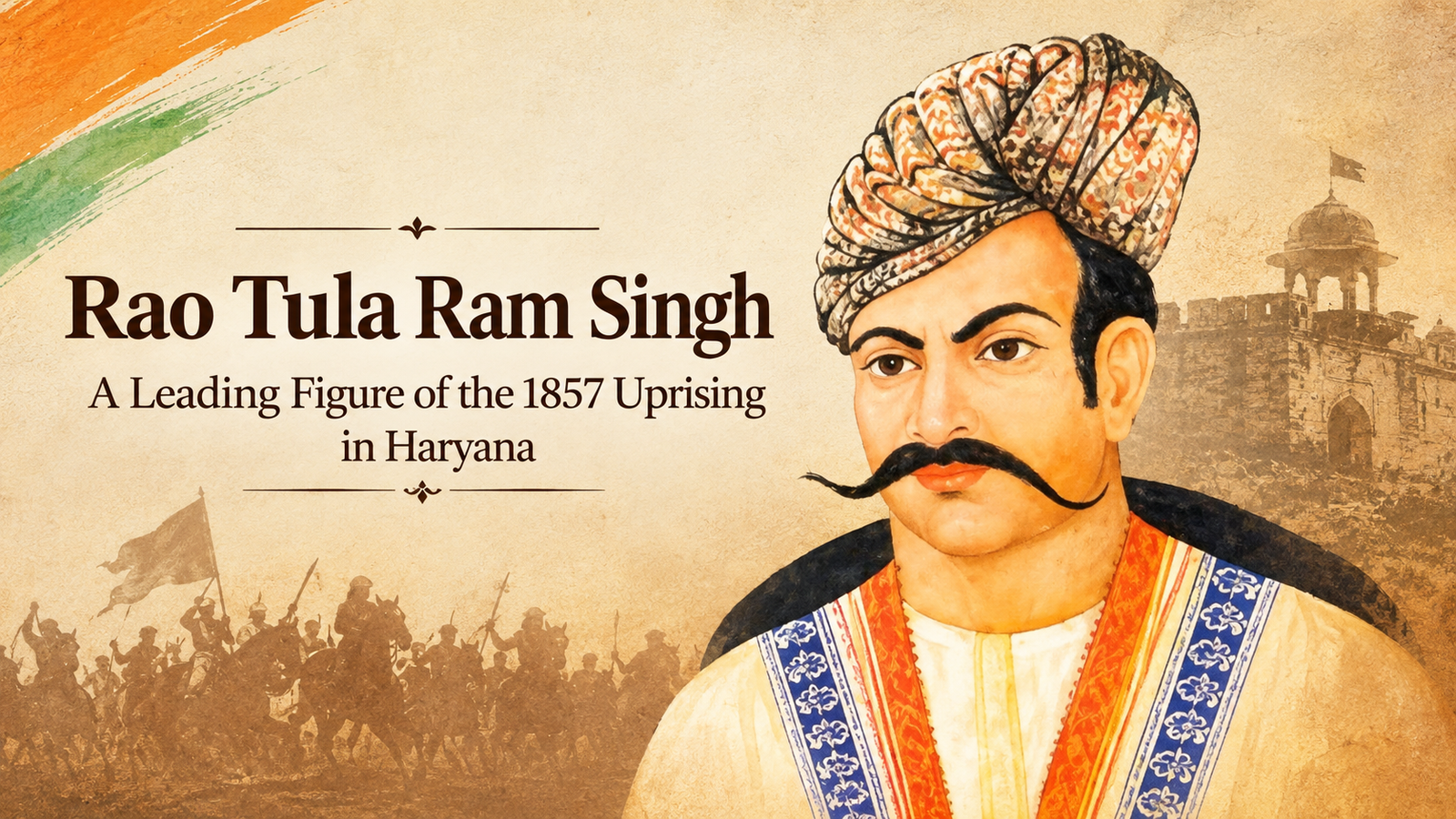
Rao Tula Ram Singh was a prominent leader of the Indian Uprising of 1857 in the Rewari region of present-day Haryana. Born on 9 December 1825 at Rampura near Rewari, he belonged to the ruling Rao family of the area. His father was Puran Singh, and Tula Ram inherited the family’s jagir after his father’s death.
Government historical sources identify him as a chieftain of Rewari and a major participant in the 1857 struggle against British rule.
Leadership at Rewari
The uprising reached Rewari soon after the outbreak at Meerut. On 17 May 1857, Rao Tula Ram, together with his cousin Rao Gopal Dev, arrived at the Rewari tehsil with several hundred followers. They removed the local British-appointed officials and established their authority over the area.
Rampura became their headquarters, and Tula Ram assumed leadership while Gopal Dev served as his military commander.
Tula Ram then attempted to create an organised administration rather than relying solely on armed resistance. He organised revenue collection, raised funds from local supporters, and assembled a force reported by official histories at approximately 5,000 men.
At the fort of Rampura, he also established a workshop capable of producing guns, gun carriages, small arms and ammunition. These efforts helped make Rewari an important centre of resistance in the region.
Support for Delhi
Rao Tula Ram recognised the authority of Bahadur Shah Zafar, the Mughal emperor who became a symbolic leader of the 1857 uprising.
From Rewari, Tula Ram provided men, money and supplies to the rebel forces defending Delhi. Historical accounts record substantial financial and material assistance, although the exact amounts reported in different sources should be treated with care.
Battle of Nasibpur
After the fall of Delhi, British forces moved against the resistance in the Rewari–Narnaul region.
On 16 November 1857, Tula Ram’s forces fought the British at Nasibpur near Narnaul. The battle was a major engagement of the uprising in Haryana.
British commander Lieutenant Colonel Gerrard was killed, but British forces ultimately prevailed, forcing the rebel leadership to withdraw.
Following the defeat, Tula Ram moved through Rajasthan and was associated with the forces of Tatya Tope. He subsequently left India in an effort to obtain international assistance for the struggle against British rule.
A Ministry of Culture historical compilation records his mission to Iran and Afghanistan, including efforts to seek support through diplomatic contacts in the region.
Final Years and Legacy
Tula Ram eventually reached Kabul, where he died on 23 September 1863, aged 37 or 38 depending on the method of age calculation.
His political and military efforts had taken him far beyond Rewari, reflecting the wider international dimensions that some leaders of the 1857 uprising explored after the rebellion was suppressed.
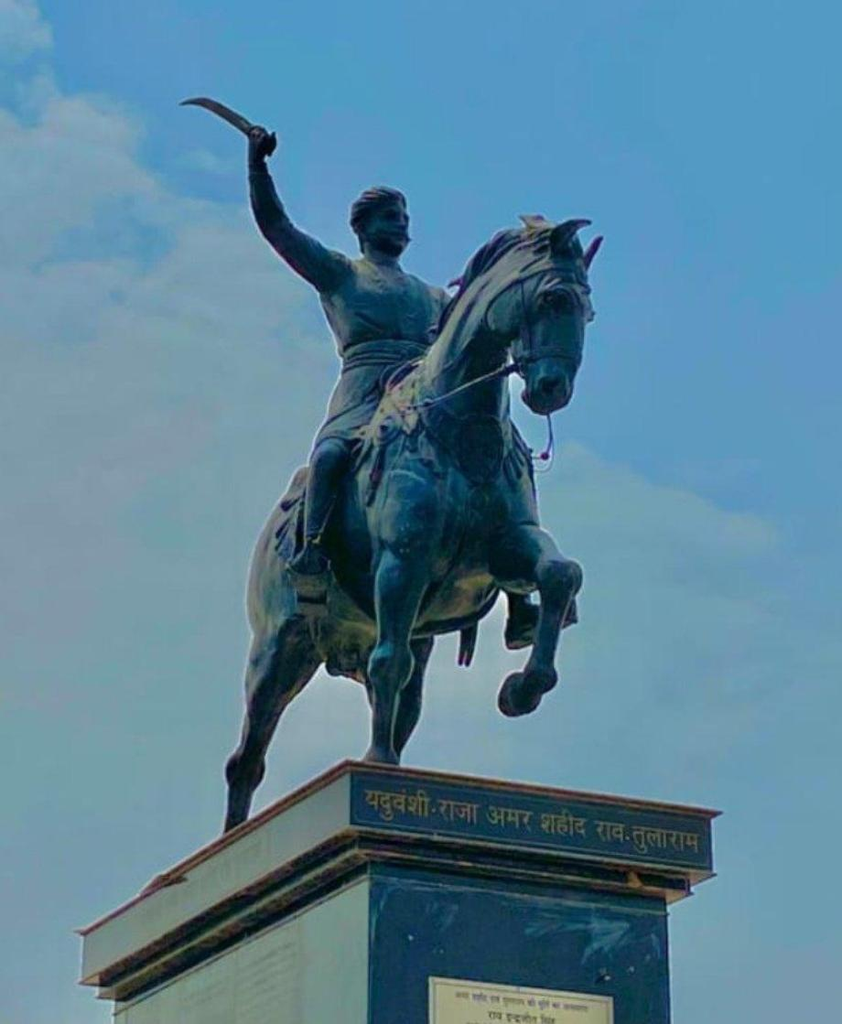
Today, Rao Tula Ram is commemorated in Haryana as an important figure of the 1857 resistance. His name is associated particularly with Rewari, Rampura and the Battle of Nasibpur.
Memorials, portraits and commemorative material continue to preserve his memory as part of the history of India’s struggle against British rule.
Key Dates
| Date | Event |
|---|---|
| 9 December 1825 | Born at Rampura, Rewari |
| 1839 | Succeeded to the family jagir after his father’s death |
| 17 May 1857 | Took control of Rewari and established his administration |
| 16 November 1857 | Battle of Nasibpur |
| 1857–63 | Continued efforts to obtain support outside India |
| 23 September 1863 | Died in Kabul |
Commemorative Stamp
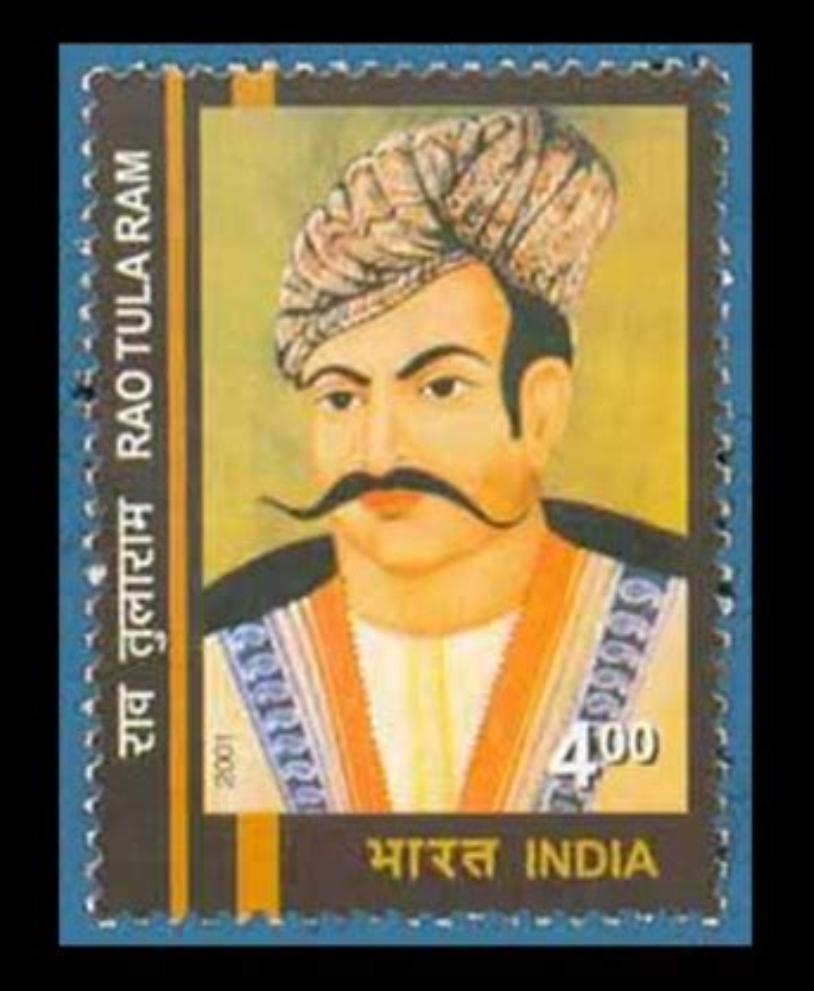
The Government of India has also commemorated Rao Tula Ram through a postage stamp issued in his honour.